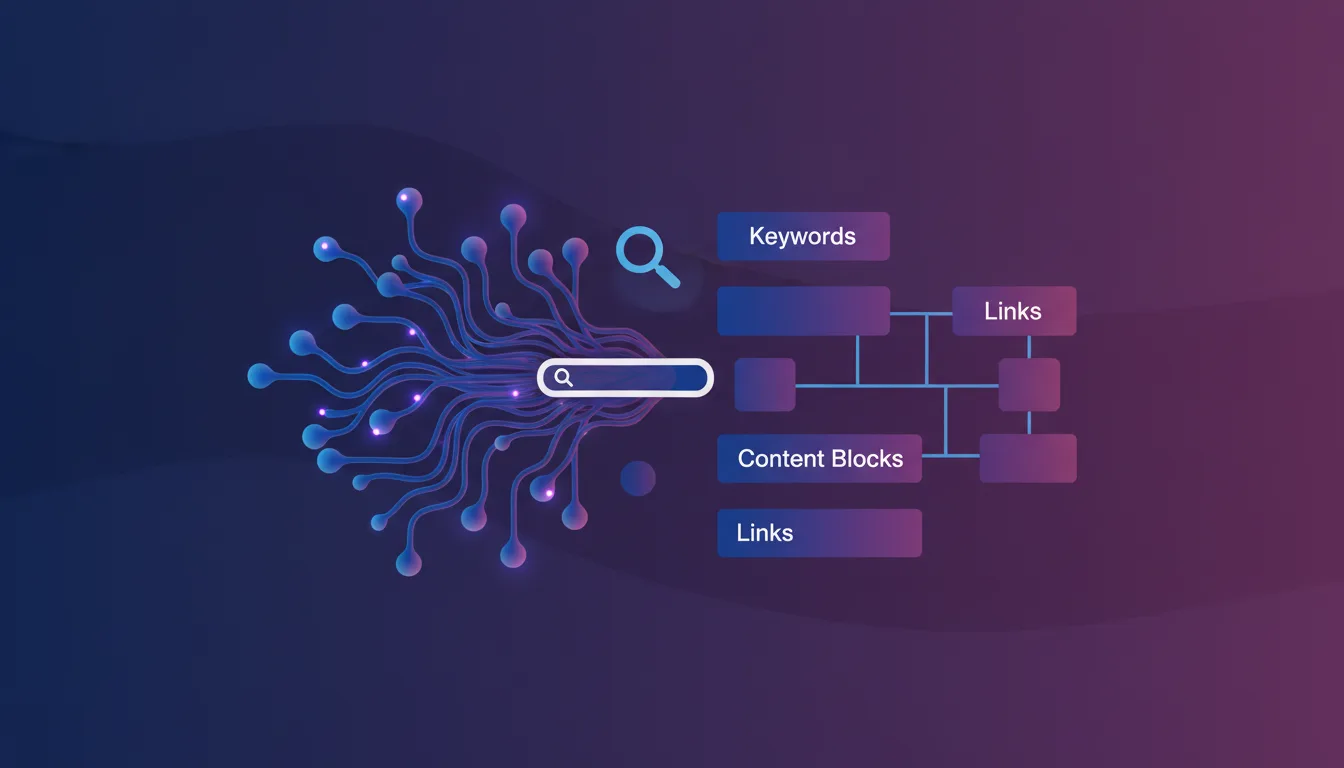
AI has moved from novelty to necessity in SEO workflows. But there's a real difference between using AI as a shortcut and using it as a tool inside a disciplined process. Teams that treat AI as a replacement for strategy tend to produce generic pages that rank briefly and fade. Teams that use it tactically — inside specific, well-defined steps — get faster results without sacrificing quality. Below are five concrete ways to apply AI across your SEO work in 2026, along with where it tends to go wrong.
1. Use AI to Accelerate Keyword and Topic Research
Large language models are useful for expanding a seed list of keywords into clusters of related questions, synonyms and long-tail variations that a human researcher might miss. Feed an AI tool a core topic and ask it to generate the questions real customers ask around that topic — this often surfaces intent gaps that traditional keyword tools underrepresent, especially for niche B2B or local search terms.
The catch: AI-generated keyword lists still need to be checked against real search volume and ranking difficulty data. Treat AI output as a first draft of ideas, not a final list. This is one of the areas where combining AI speed with human strategy matters most — something we build into every SEO engagement rather than relying on tools alone.
2. Use AI to Draft Content, Then Edit for Accuracy and Voice
AI can produce a solid first draft of a blog post, product description or FAQ section in minutes. This is genuinely useful for scaling content production, particularly for teams that need to publish consistently across many pages or locations. But AI drafts are generic by default — they lack brand voice, specific data points and the kind of first-hand expertise that both readers and AI search engines increasingly reward.
The tactical approach is a hybrid workflow: AI handles structure and first-pass drafting, a human editor adds accuracy, examples and a distinct point of view. This is exactly how we approach AI content production for clients — fast enough to scale, but edited carefully enough to avoid the flat, interchangeable tone that readers (and Google) can spot immediately. For teams that want this handled end-to-end, content production as an outsourced function tends to be more consistent than mixing AI tools ad hoc across a team.
3. Use AI to Spot Technical SEO Issues Faster
AI-powered crawlers and diagnostic tools can flag broken links, duplicate title tags, missing structured data and indexing issues far faster than manual audits. Feeding crawl data into an AI model to summarize patterns — for example, which page types consistently return thin content or slow load times — can shortcut hours of manual review.
This doesn't replace the judgment needed to prioritize fixes. A tool might flag hundreds of issues; deciding which ten actually move rankings requires experience. We cover the underlying causes in more detail in our guide to why sites stop ranking, and this is also where technical SEO work earns its value — turning a long list of AI-flagged issues into a prioritized fix plan.
4. Use AI to Strengthen Internal Linking and Site Structure
One underused tactic is asking an AI model to review a set of pages and suggest logical internal links based on topic overlap. This is particularly effective on large sites where manual link audits are impractical. AI can quickly identify which pages should link to which, based on semantic similarity, helping distribute authority and guide both users and crawlers through a site more logically.
Good internal linking also matters more than ever for AI search visibility. When AI answer engines crawl a site, a clear internal link structure helps them understand which pages are authoritative on a given topic — a factor we explain further in 7 things you need to do to be found by AI search engines.
5. Use AI to Prepare Content for AI Search Citation
Perhaps the most forward-looking tactic is using AI itself to test how your content performs in AI search results. Run your own pages through ChatGPT, Perplexity or Gemini and ask direct questions your content should answer — then check whether your business gets cited, and how accurately. This reveals gaps between what you've published and what AI tools actually extract and quote.
This feedback loop is central to how we approach GEO and AEO work — structuring content specifically so it can be pulled out as a direct, citable answer rather than just ranked as a link. It's also closely tied to broader LLM Optimization, which focuses on making sure AI models can read and represent a business accurately in the first place.
Using AI Without Losing Strategic Control
The common thread across all five tactics is that AI accelerates specific tasks — research, drafting, auditing, structuring, testing — but doesn't replace the judgment needed to prioritize, edit and align that work with business goals. Agencies and in-house teams that get the best results treat AI as a force multiplier inside an existing SEO strategy, not a substitute for one.
If you're weighing how much this should cost to implement properly, our breakdown of SEO pricing in 2026 covers what typically drives budget up or down. And if you'd rather see AI-assisted SEO applied to a real business than assemble the workflow yourself, get in touch and we can walk through what a tactical, AI-supported SEO plan would look like for your site.